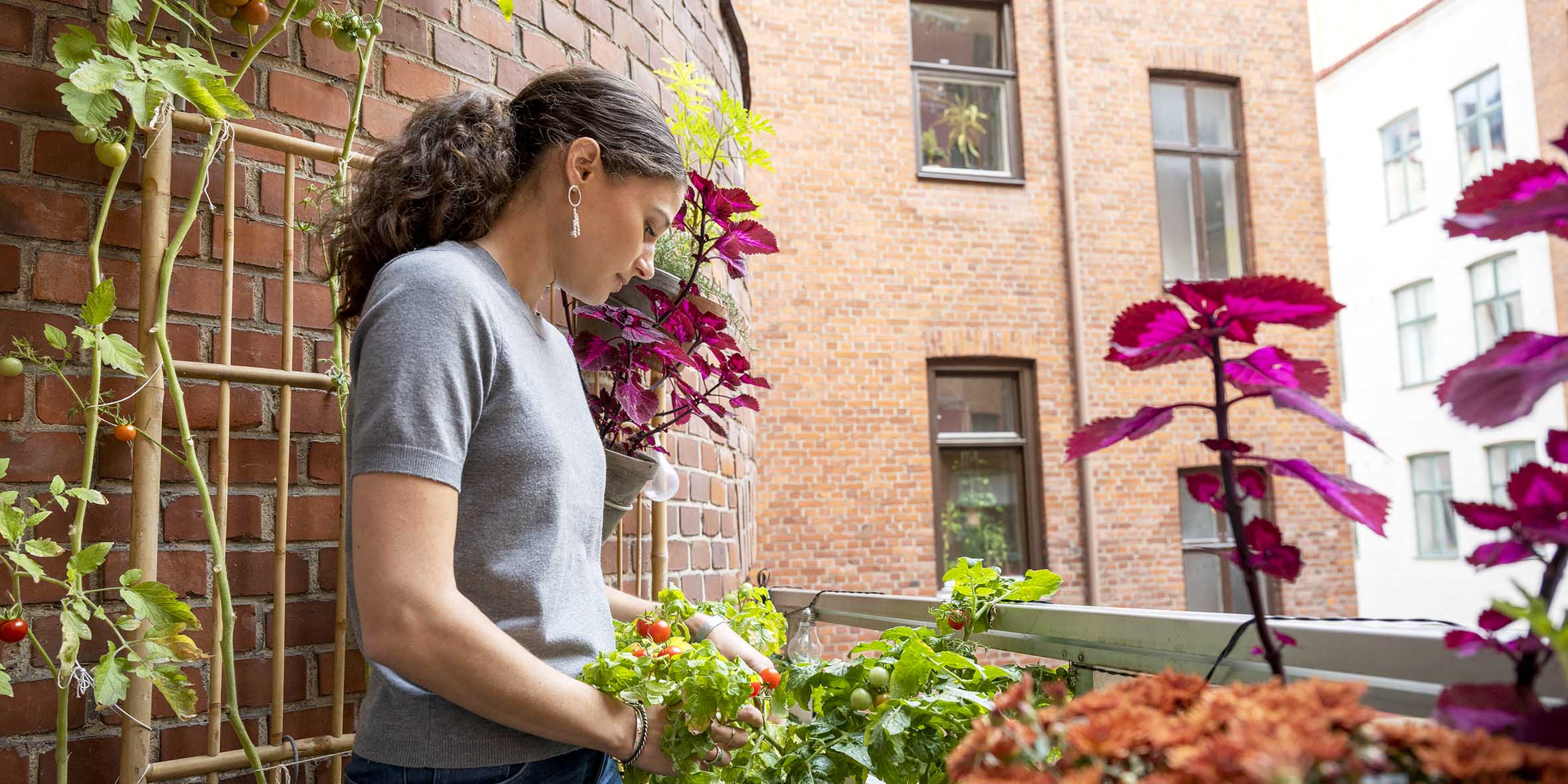
The temperatures are warming up and the trees and plants are beginning to come back to life. Now is the time to prepare for a flamboyant summer balcony! There are a variety of seeds that are well suited to sow in March/April. Different kinds of lettuce, spinach, carrots, cabbage and green onions are some examples.
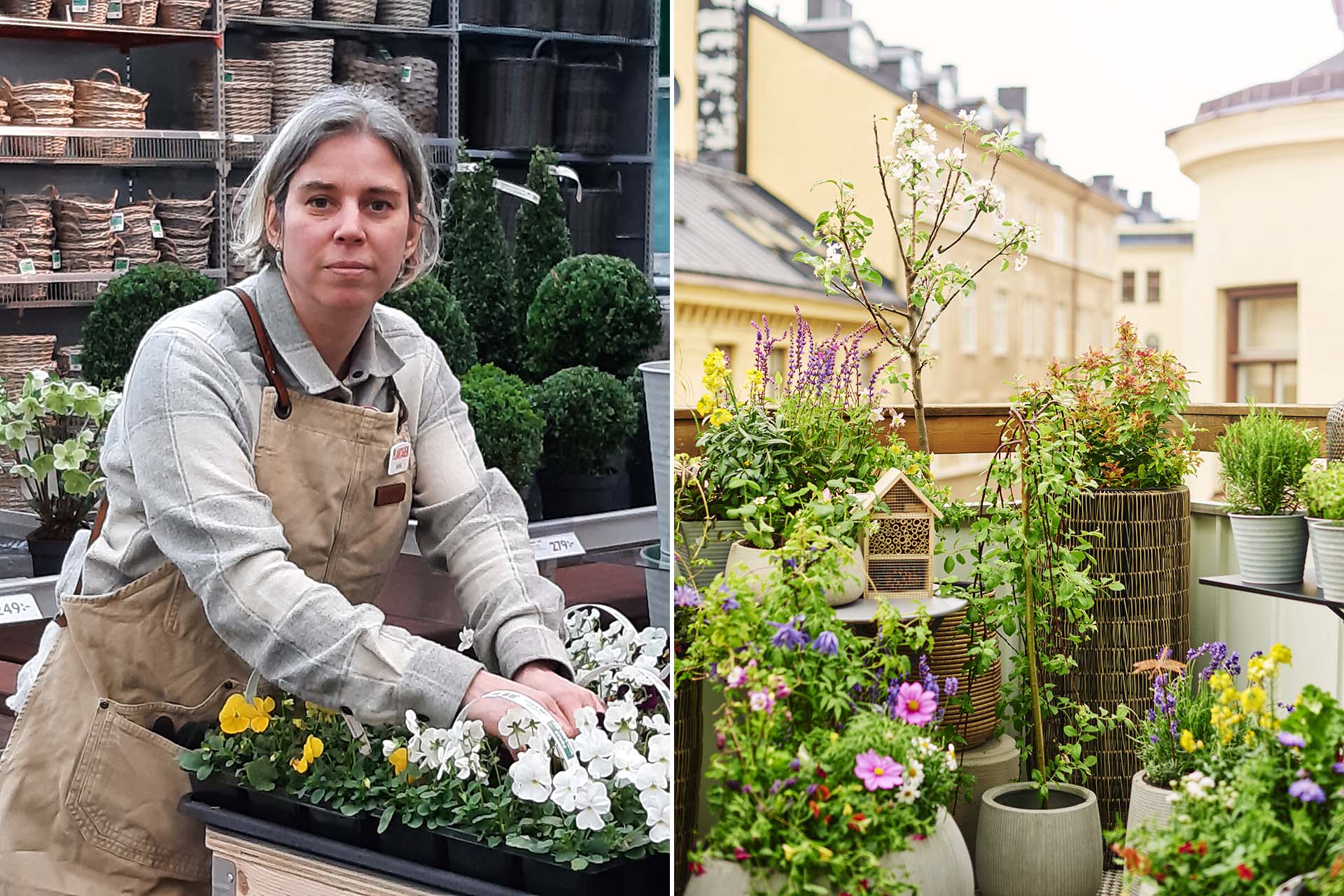
– Among the ornamental plants, pansies can be planted early in the year since they tolerate frost very well. They add colour to the balcony and can also be used in salads. This is because they are edible, says Anna Troberg, gardener at Plantagen.
She also suggests sunflowers, sweet peas and different kinds of poppies.
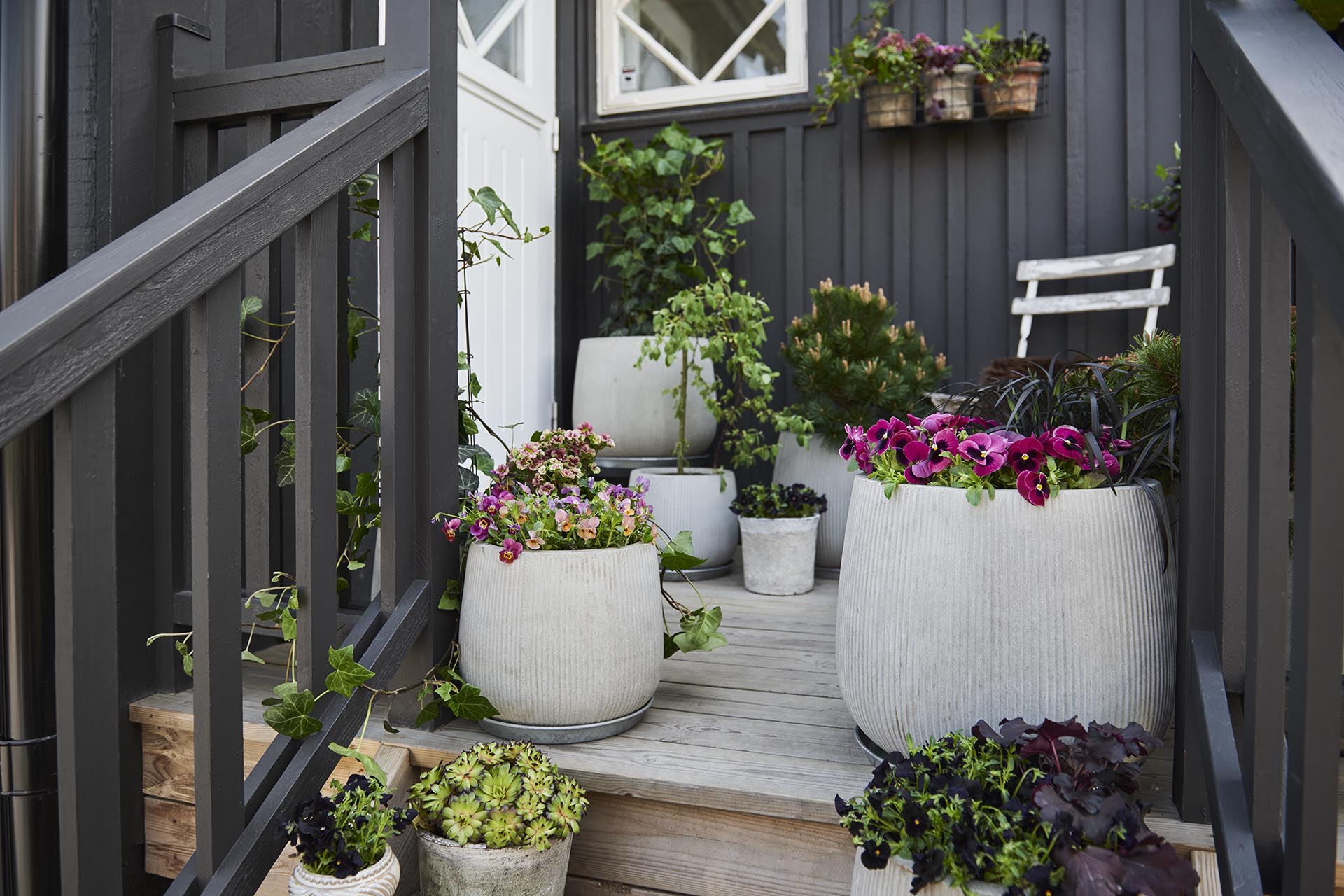
Image: Plantagen
This is how you succeed with balcony gardening
Do you want to grow leeks, peppers, tomatoes, chilies, celery or ornamental plants such as petunias and dahlias? These plants can grow well on a balcony but should be started indoors to ensure a summer harvest.
Most things can grow on the balcony, even shrubs and trees.
– A lot has happened in this market in the last five to ten years. Today there are berry bushes and small fruit trees that can be grown in larger pots or pallet collars.
There are also a lot of practical tools for successful cultivation on the balcony. For example, choose washers that fit under pallet collars. Trellises are also easy to attach and remove as needed, says Anna Troberg.
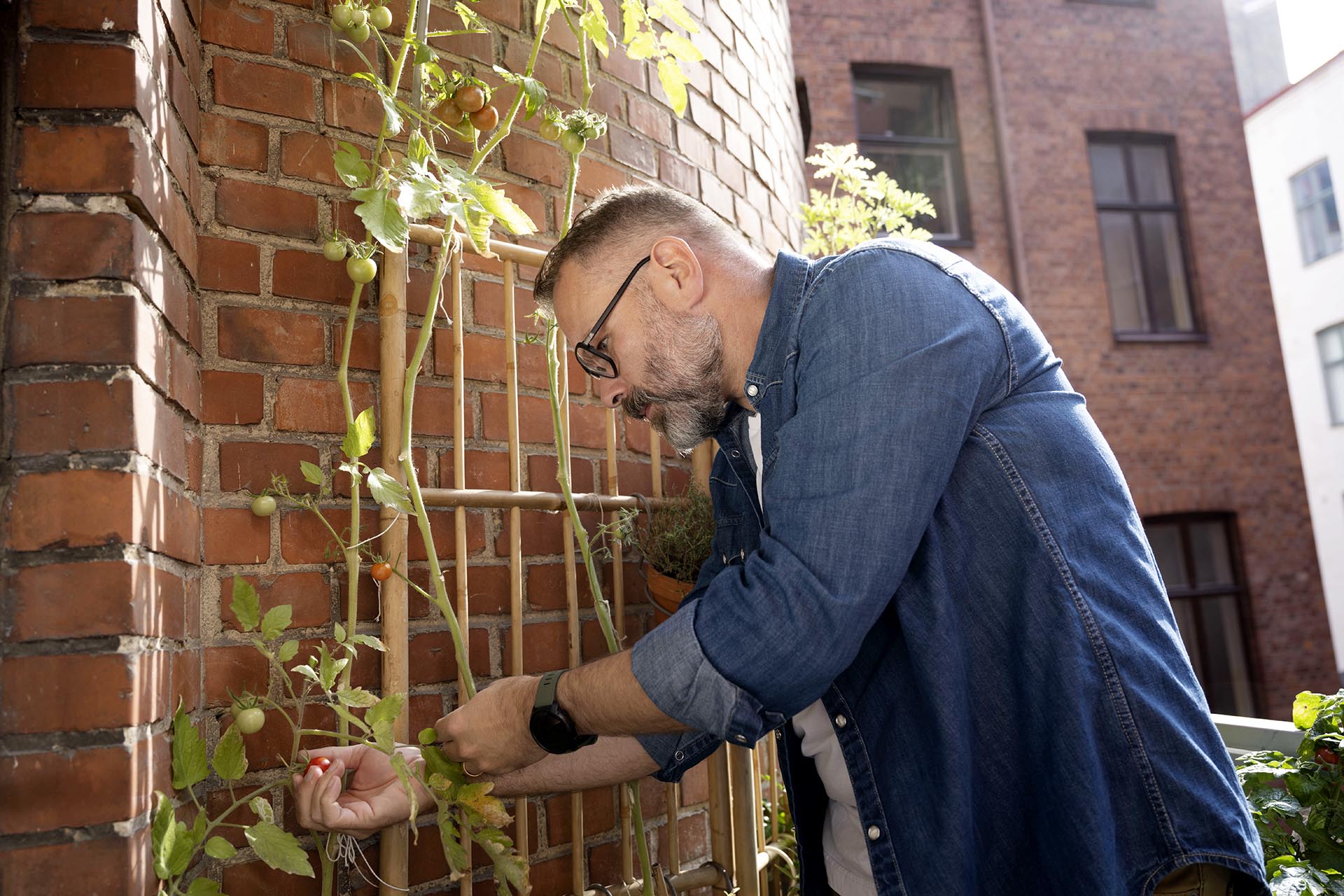
Anna’s best tips for successful balcony gardening
Choose the right soil!
It all starts with the soil. Choose a quality soil that has been properly fertilised, has a lot of micro-life and retains moisture. Windy balcony conditions can dry out soil quickly, making moisture-retaining soil ideal for summer growing.
Mix several plants in one larger pot
Don’t put the plants too close to each other and avoid drought with a bigger pot. Mix different plants. There are many plants that grow well together, saving space and enhancing your balcony.
A compact broad bean plant, around 90 cm tall, pairs well with palm cabbage. ‘Nero di Toscana’ is a popular choice, producing curly, dark green leaves. Add a red-leafed pickle salad, like ‘Red salat bowl’. This combination is very nice.
Don’t be afraid to experiment when you mix. Your own experience is worth its weight in gold! I like to mix ornamental plants with edible pants. Marigolds, borage, poppies and cress flourish in my vegetable garden. Oregano and thyme attract bees and butterflies to my perennial beds. Aromatic herbs are also a good way to keep lice out, for example.
Maximise the surface
When space is limited, plan your garden carefully. Try growing plants at different heights to make better use of the area. Drought-tolerant herbs like thyme and rosemary grow well in small pots attached to a trellis or wall-mounted mesh. Specially designed pots can be hung over both sides of a balcony railing. They are ideal for plants that need little soil, such as strawberries, chives and lettuce.
Sun or shade
When choosing edible crops for your balcony, consider its location. Sunlight and shade will affect which plants grow best. For shady balconies, choose moisture-loving plants such as lettuce, spinach, chard and celery. Kale, pak choi and other Asian leafy greens also grow well in partial shade.
Chives, sorrels, carrots, beets and other root vegetables can also handle shade, although not the entire time. Delicious lettuce varieties in different colours create contrasts that work well in the shade. Sunny locations are suitable for chili, peppers, tomatoes, cucumbers, onions, peas and beans.
Try bokashi!
A bokashi compost is a great tool that you can use whether you live in a flat or a house. Food and plant waste from balcony gardening can easily be composted. Bokashi is a fast fermentation process carried out in small, odourless containers. It produces nutrient-rich compost while helping you create your own soil.
Images: Plantagen
Do you feel like gardening, but don’t have a balcony?
Relax! There are many crops that thrive on the windowsill. Some spices and herbs love the indoors, such as the basil family. Thai, lime and lemon basil all fit on the windowsill. Potted tomatoes and mini cucumbers are also popular to grow indoors. They get the best taste if they get tons of sunshine.
Then there is a wide range of sprouts that you can grow indoors all year round. According to Anna, pea shoots, beetroot sprouts and cress make a tasty sandwich topping. They also provide a valuable vitamin boost in winter.